Cherry Trees
Sweet or tangy, we can all agree - cherries are the best!
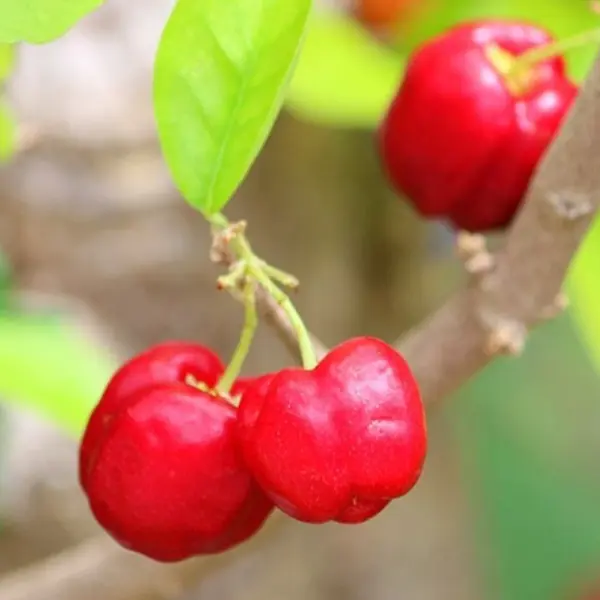
Barbados Cherry
Barbados Cherry is well suited for USDA Growing Zones 9A and 9B—ideal for St. Augustine and Northeast Florida gardens. Also known as Acerola, 'Barbados Cherry' is a tropical shrub that produces bright red fruit loaded with vitamin C. Great for juicing, fresh eating, or jams.
- Harvest Season: Spring–Fall; multiple crops in warm climates
- Tree Size: 8–12 ft, compact and bushy
- Uses: Fresh eating, juice, jams, preserves
- Pollination: Self-pollinating (higher yields with another plant)
- Chill Hours: None (tropical/subtropical)

Montmorency Cherry
Montmorency Cherry is well suited for USDA Growing Zones 9A and 9B—ideal for St. Augustine and Northeast Florida gardens. 'Montmorency' is the most popular tart cherry variety in North America. It produces bright red fruit perfect for pies, preserves, and drying.
- Harvest Season: Early–mid summer
- Tree Size: 15–20 ft, spreading habit
- Uses: Baking, preserves, juice, drying
- Pollination: Self-pollinating
- Chill Hours: 1,000+ hours

Surinam Cherry
Surinam Cherry is well suited for USDA Growing Zones 9A and 9B—ideal for St. Augustine and Northeast Florida gardens. 'Surinam Cherry', also called Pitanga, is a tropical shrub or small tree with ribbed fruit that turns bright red or black when ripe. Tangy-sweet and great fresh or preserved.
- Harvest Season: Spring & Fall; often multiple crops
- Tree Size: 10–15 ft, dense foliage
- Uses: Fresh eating, jams, jellies, juice
- Pollination: Self-pollinating
- Chill Hours: None (tropical/subtropical)