Kumquat Trees
Grapefruits, Kumquats, Lemons, Limes, Oranges, Tangerines, Tangelos with so much flavor, how do you plant just one?
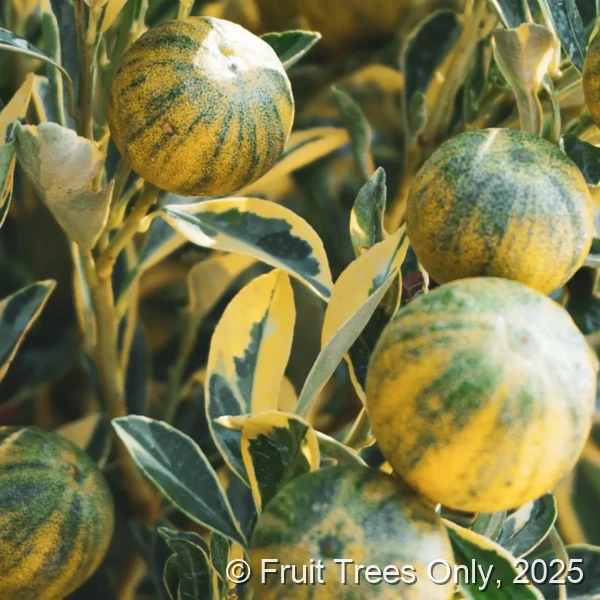
Centennial Variegated Kumquat
Centennial Variegated Kumquat is well suited for USDA Growing Zones 9A and 9B—ideal for St. Augustine and Northeast Florida gardens. Cream-striped fruit and foliage; tart-sweet flavor for snacking or marmalade.
- Harvest Season (FL): November–January
- Tree Size: Small, 6–10 ft
- Uses: Eat whole, candying, marmalades, cocktail garnish
- Pollination: Self-fertile
- Chill Hours: None (handles cool snaps)
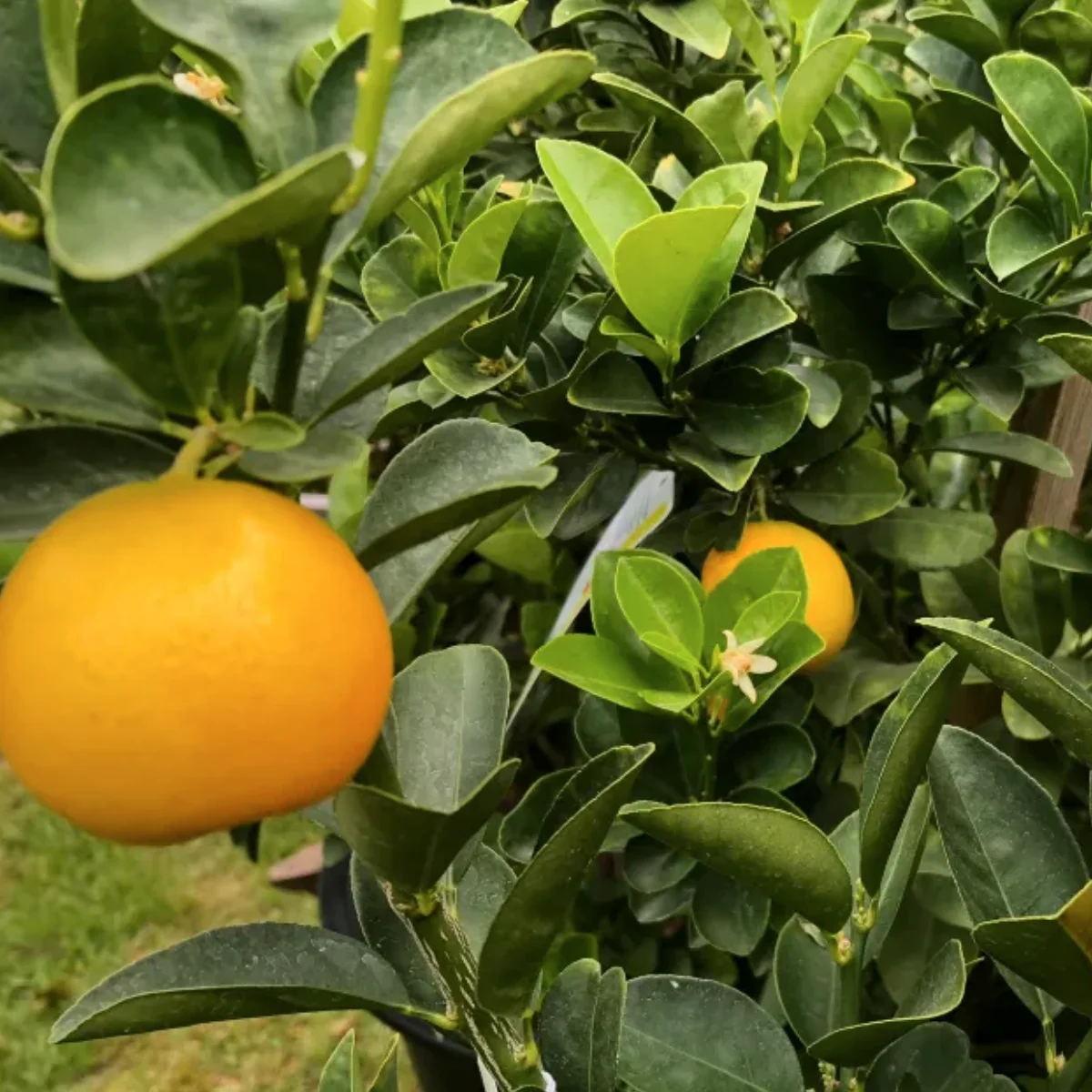
Marumi (Round) Kumquat
Marumi (Round) Kumquat is well suited for USDA Growing Zones 9A and 9B—ideal for St. Augustine and Northeast Florida gardens. Round, sweet-peel fruit with tangy pulp; great eaten whole or preserved.
- Harvest Season (FL): November–January
- Tree Size: Small, 6–10 ft
- Uses: Fresh whole-fruit snacking, marmalades, candying
- Pollination: Self-fertile
- Chill Hours: None (cool-tolerant)
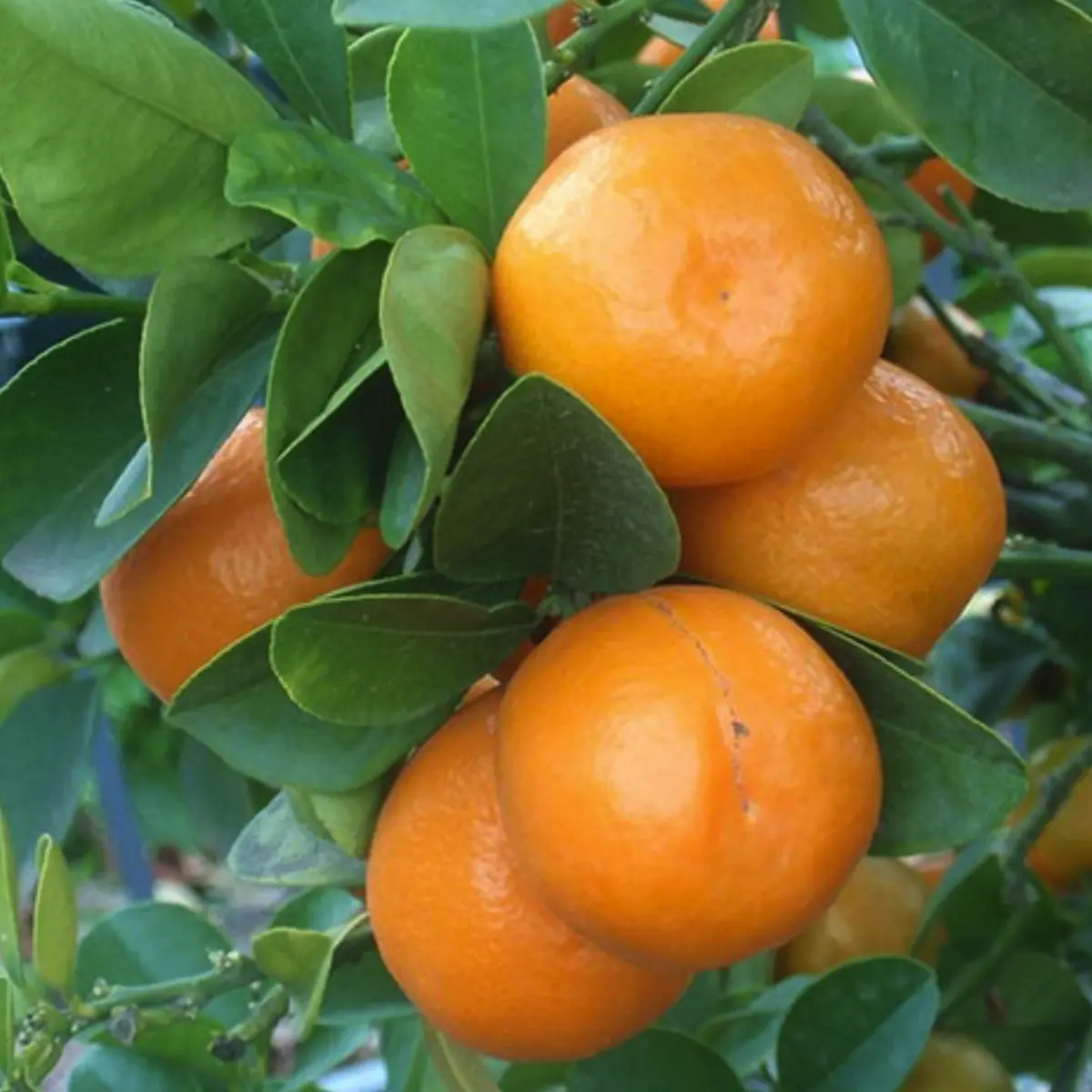
Meiwa (Round) Kumquat
Meiwa (Round) Kumquat is well suited for USDA Growing Zones 9A and 9B—ideal for St. Augustine and Northeast Florida gardens. Extra-sweet peel and mild pulp; best fresh-eating kumquat variety.
- Harvest Season (FL): December–February
- Tree Size: Small, 6–10 ft
- Uses: Fresh whole-fruit eating, candies, desserts
- Pollination: Self-fertile
- Chill Hours: None (cool-tolerant)
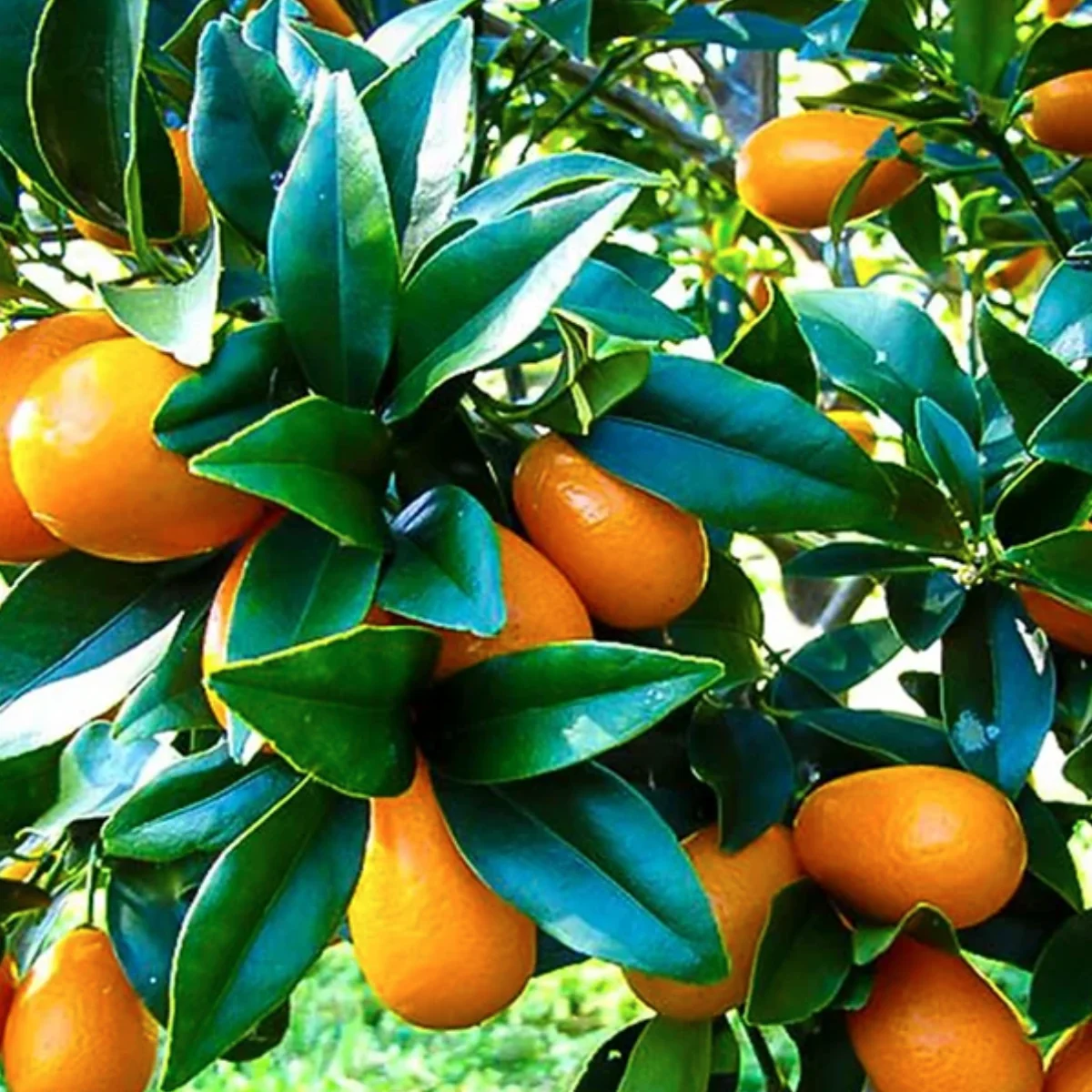
Nagami (Long) Kumquat
Nagami (Long) Kumquat is well suited for USDA Growing Zones 9A and 9B—ideal for St. Augustine and Northeast Florida gardens. Oblong fruit with sweet peel and tart pulp; excellent candied or fresh.
- Harvest Season (FL): November–January
- Tree Size: Small, 6–10 ft
- Uses: Fresh eating, marmalades, candying, drinks
- Pollination: Self-fertile
- Chill Hours: None (cool-tolerant)